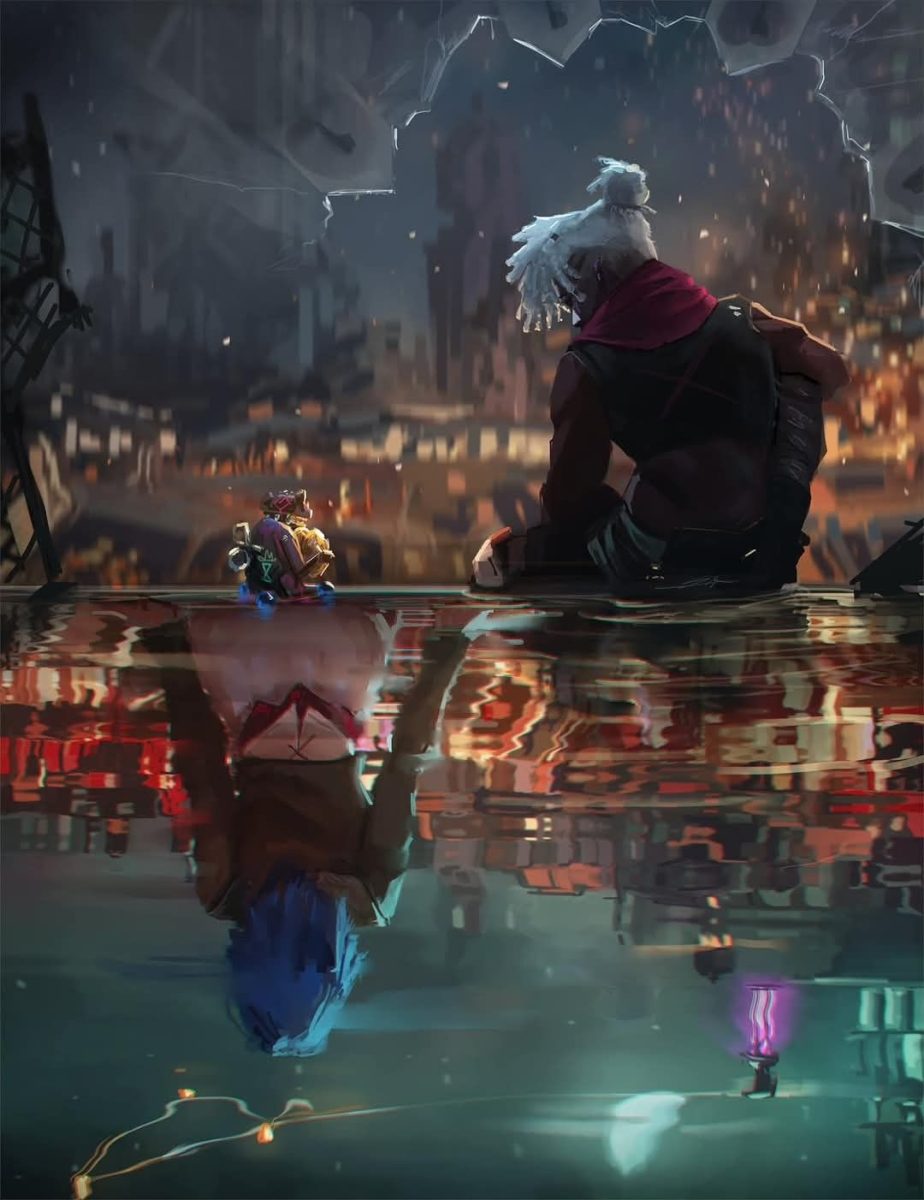
Surprise hit when Arcane arrived in 2021 through a collaboration between Netflix and Riot Games. Most assumed another predictable gaming spin-off was coming. Yet here came something bold, visually rich, and emotionally layered. It wove the universe of League of Legends into drama more intense than spectacle. Not merely avoiding tired pitfalls of game adaptations. This one redefined what animated storytelling could carry forward. Where fantasy met raw personal conflict, it found depth few saw coming.
Part I: A Visual Revolution in the Art of Moving Paintings
Arcane hits you first with how it looks. This comes from Fortiche, a studio based in France. Their method mixes 3D figures against backdrops and surfaces made like traditional paintings. What stands out is the way depth meets brushstroke without one overpowering the other.
The “Painted” Aesthetic
Not like most new studios chasing real-life visuals, Arcane goes for something closer to moving canvas art. Each scene holds tiny marks, where paint-like streaks show up on walls, clothes, skin. Because of this choice, shadows dance differently, air feels thick, moods shift in ways flat computer models rarely capture. Up above, the city of Piltover glows, sunlit towers shaped with old-world elegance. Down below, the city of Zaun pulses under wet streets lit by flickering signs. These places do more than sit in the background, they speak without words.
Cinematic Movement and Dynamic Force
A sudden jolt of handheld motion throws you into the middle of every clash, like the camera itself is dodging punches. Close frames linger on faces when emotions crack open, holding still while everything inside trembles. Wide views stretch across both cities at once, making them feel vast yet tangled together by fate. Movement defines who they are, one of the main characters of the show, Vi fights like she’s dragging weight through mud, each hit deliberate. The complimenting main character, Jinx darts and spins without warning, her energy sparking in jagged directions. What happens on screen unfolds not just before your eyes but around them.
Part II: Two Sisters and the Weight of Loss
Fundamentally, Arcane tells of two sisters, Vi and Powder, who later becomes Jinx, and the slow breaking of their connection. Outside forces pull them apart. Pain builds where trust once lived. One moment changes everything. The world around them falls both in different ways. What ties remain snap under pressure. Their love gets buried beneath layers of pain. Systems meant to protect do more harm than good. Each choice pushes them further into separate lives.
The Fall of an Enemy
From a hopeful kid to a shattered soul, Powder becomes Jinx in a way few stories match on screen. Her mind unravels not through drama but quiet cracks, sketch-like images flash across scenes, sounds twist without warning. You do not just watch her breakdown; you step inside her mind and live it. Madness here isn’t random; it grows from being left behind, shaped by a guardian’s twisted care. What looks like chaos has roots deeper than rage.
Gray Areas and Complicated Opponents
Right from the start, Arcane avoids painting anyone as simply good or bad. Though the villain of the first season Silco runs an empire with force, he fights for freedom, his way, for those who have none. Jayce, the sort of anti-hero of the story dreams up machines that change lives, yet still gets tangled in power struggles he wanted nothing to do with. What pushes each person comes from where they grew up, what they’ve lived through. Disagreements grow out of real differences, not grand speeches. Sad moments hit hard because you see how things might have gone another way, if only.
Part III: Messaging Reflects Our World
Fueled by more than just spell-slinging battles and glowing tech, Arcane digs into how wealth gaps feed unrest. From bottom to top, cities split by class reveal how anger passes down through generations. Power stays locked in towers while streets simmer below. One spark turns grief into fire, again and again.
The Rich Get Richer While Systems Fail Everyone Else
High above, life moves smoothly, while down below, every breath feels heavier. Power climbs while others get left behind, their voices ignored. Progress hums in polished towers yet echoes strangely in narrow alleys where dust never settles. Machines advance, but only because hands down below keep turning gears without rest. Greatness gets celebrated, though nobody checks who paid for it. Pain builds slowly when no one listens, until anger finds a shape. People in the destitute city of Zaun do not riot just because they react after years of being treated as invisible. A member of the city, Viktor, knows this well, his body weakened, his past rooted deep in forgotten streets. Ideals sound noble from balconies, but they rarely survive the trip downward. What floats as hope up in the golden city sinks as wreckage down in the slums.
The Weight of What Was and What Could Be
Science can heal, yet it might harm. What starts as hope in Piltover twists into weapons under pressure. Jayce reaches for progress, Viktor chases dreams beyond limits. One breakthrough leads to control, then conflict follows close behind. Ideas meant to lift people up get pulled down by greed. Knowledge sits quietly while others decide its fate. Power changes hands fast, magic, machines, authority, all bend toward dominance eventually. Good intentions do not shield anyone from fallout. Thought experiments meet concrete disaster. Discovery does not care who owns it once released.
The Cycle of Trauma and Revenge
What sticks hardest in Arcane is how hurt travels, handed like old tools from one age to the next. Instead of glory, what kids inherit is wreckage, father’s regrets and leaders who look away. That hunger for payback? It drags more than it lifts. Each act piles weight onto those too young to carry it. When things settle, there’s no triumph, only silence where answers should be. Healing can’t start while roots stay poisoned.
A Landmark in Animation
What stands out about Arcane isn’t one thing alone, it’s how everything fits: words spoken, voices chosen, sounds built, images drawn, each piece sharp and sure. Not often does a show make space for grown-up feelings while still moving fast, hitting hard, yet staying true to what it means to tell a story well. When the last beat echoes and silence returns, viewers sit with loss, regret, moments that cannot be undone, cities cracked but glowing beneath smoke-stained skies. Forget labels like spin-off or tie-in; this belongs beside the greats, framed not by origin but by impact alone.