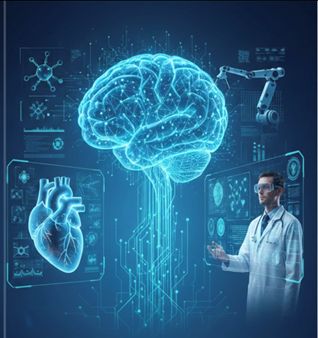
The medical field is being transformed by developments in artificial intelligence, ranging from the early diagnosis of diseases to the optimization of medical workflow (Faiyazuddin et al., Bajwa et al.). Currently, medical images can be accurately analyzed by AI models that equal doctors’ performance, the deterioration of patients within hospitals can be foreseen by AI models, and AI can help doctors by summarizing patients’ information within seconds (Obuchowicz et al., Perkins et al.).
One area where technology has made the most significant contribution is in diagnostics. AI algorithms trained on thousands of scans can better identify cancer, cardiovascular disease, and neurological disorders, allowing doctors to make quicker and well-informed decisions (Obuchowicz et al.). In scientific research, AI is assisting in discovering drug compounds in a significantly shortAI in Healthcare – Promise, Progress, and Cautioner period than usual research would take (Ali et al.; Chen et al.).
However, such rapid growth brings about challenges. There have been issues associated with privacy, bias, and dependence on these automated systems, leading to calls for regulations and ethical practices (Egan). With the growing integration of AI within the medical industry, issues of transparency, accuracy, and human control will become fundamental (Fahim et al., Wang & Beecy).
The use of AI in healthcare is no longer experimental. Its role is becoming foundational, having the potential to enhance care, reduce costs, and redefine the delivery of care, provided that it is implemented responsibly (Bajwa et al.; Ferreira & Carneiro).