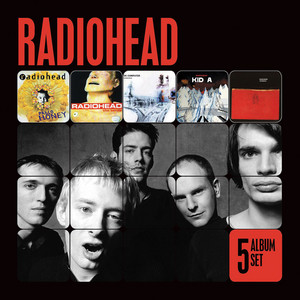
Radiohead originally started as On a Friday (OAF), because the band members met during their years at Abingdon School in Oxfordshire England in 1985 and had their practices on Fridays. The five members, Thom Yorke as the lead vocalist, Colin Greenwood on bass, Multi-instrumentalist Johnny Greenwood, guitarist Ed O’Brien and drummer Phil Senway didn’t know each other well in the beginning days of On a Friday. The band drew inspiration from The Smiths, U2, and Joy Division, occasionally playing at parties around Oxford. Later, in college, OAF rarely found time to practice between breaks, but, in 1991 the band regrouped and played for an audience of 6 at a local pub. A demo tape was passed around oxford as the band began to pick up more traction, eventually getting a 6-album deal with EMI, one of the largest record labels worldwide. Shortly after, the band changed their official name to Radiohead and released their first EP, Drill, in 1992. The album didn’t latch onto audiences, so the band went back to the studio to do some work. One song, Creep, was recorded in just one take. The members weren’t impressed with the completed song, and Johnny went back to fix it by adding bursts of guitar before the chorus, which gave the song its popularity.
Pablo Honey (1993):
Rating: 3.5/5
Pablo Honey features the bands’ most popular song, Creep, which is still Radiohead’s’ number one song today. The first album consists of a grunge feel, with punk and rock overtones, but doesn’t stray further from that. The few moments songs feature some experimentation is when Yorke’s artistry shines the brightest. Guitar is the heaviest instrument heard here, and with softer, scratchy vocals found in You and Stop Whispering, you feel as if you’re part of an identity crisis within the band. Blow Out, however, is the most experimental song of the album, with features of a synthesizer and a larger piano sound. It is what you would expect from an experimental band’s first album- an experiment.
The Bends (1995):
Rating: 4/5
This is where Radiohead began to pick up speed. The album is more consistent with its songs, where they all sound put together and that they belong within the same record. Yorke’s definable falsetto is more confident; High and Dry being popular among listeners where his lyrics and voice bring up the highs and diminishes the lows. Radiohead comes into its own, with the songs becoming more and more developed with each listen. Fake Plastic Trees has a beautiful and powerful chorus, filling listeners with cathartic and intense emotion. While the music is incredible, the album is still missing the punch that makes Radiohead a household name.
OK Computer (1997)
Rating: 4/5
The success of The Bends could have led to another album with heavy, grunge pop guitar aesthetics, but instead, the band went in a completely different direction. Veering into uncharted territory, OK Computer is a craft of haunting electronic elements and grotesque, introspective lyrics. The album feels cinematic, with each song slowly building tension until the final minute where an eruption of emotion and drums break through the song’s walls. The self-production of the songs led to an easier time experimenting with sound; each noise, beat and moment in the songs feel intentional.