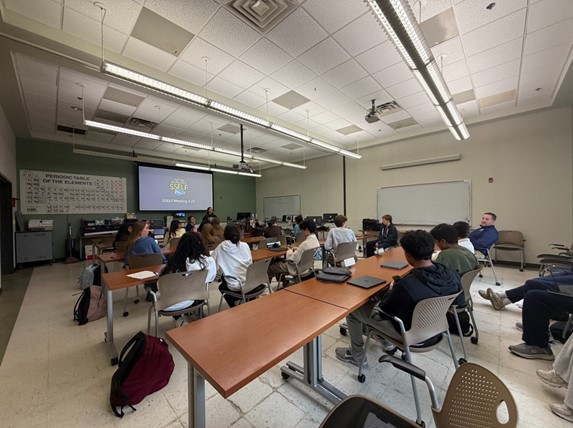
Recently, AP Cybersecurity was approved as a new AP class available in the district after a relatively long process of approval by Mr. Frey. After talking with Mr. Frey, it’s clear that cybersecurity is a very important field and will continue to be moving forward. Modern life is essentially melded with technology to the point where living without tech is virtually unviable. In a world fused with technology, cybersecurity becomes a necessity in a similar way that regular security is to us. The only reason that someone wouldn’t think of cybersecurity in the modern day is because someone else had already thought about it for them, and those who would think about cybersecurity are coming in shorter supply. These cybersecurity specialists work to find exploits in computer systems and vulnerabilities in code and even the way people act. This is called social engineering, and it is used by hackers all the time to access data otherwise unavailable to them. This is because cybersecurity is not solely a cyber concern. It’s more of a study of how to secure data- it just so happens that almost all data transfer happens online and in volumes unconceivable to any of us, and the main threat to all of it is human. All this talk may seem distant from the everyday use of technology in the classroom or in our personal lives, though it really isn’t.
Every day we interact with companies online that use systems that need to be secured on devices which run software which needs to be secured. The people operating these large systems (and even people using devices) need to understand what it means for something to be secured because an ignorance of the security of data is easy to exploit. For example, in 2013 Yahoo had a cybersecurity breach which compromised 3 billion accounts. The attack started very small, but when data storage was realized to have been mishandled, the attack spiraled. The attack had left 3 billion names, phone numbers, birthdates, passwords, and email addresses completely compromised. Anyone using Yahoo.com, which at the time was a very sizable number of people, had all their personal emails and accounts completely exposed and whatever information inside each account only a public password away from being completely stolen. Many of these passwords had even been reused for other accounts which had then in turn been compromised. These attacks are not just the company’s problem anymore, our trust in the companies and their methods leaves us at the whim of their (or lack of) cyber security choices. This then becomes our problem and the only way to combat this is to inform ourselves of good practices in cybersecurity.
Cybersecurity is a multi-hundred-billion-dollar industry which only stands to grow in the coming decades. Companies now are looking for, and will continue to look for, more cybersecurity specialists in the coming decades, and the only way to take advantage of this is for us to be exposed to cybersecurity as a possible interest, career, or even hobby. AP Cybersecurity aims to do exactly that. In the course students will learn how information travels, common vulnerabilities in code, how to detect attacks in cybersecurity, how to secure devices against common vulnerabilities, testing common vulnerabilities on virtual machines, and just seeing something which you otherwise wouldn’t ever be exposed to too, or even worse, forced to be exposed to later in life. AP Cybersecurity has already been shown to have benefit and value to students even in this busy time in our district with all sorts of changes. And in a time of a district fear of technology, upper district busyness, and general stress, the class has managed to shine through as something truly valuable thanks to Mr. Frey. So, if anything, consider AP Cybersecurity in your upcoming course selection.